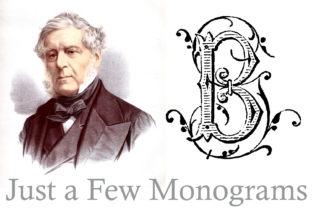
Why Just a Few Monograms is Your Go-To Typeface for Timeless Branding
You know that moment when you spot a logo or a wedding invitation and it just feels... right? Not flashy, not trendy, but genuinely elegant in a way that won't look dated next year? That's the sweet spot where Just a Few Monograms lives. This classic monograms font has a quiet confidence about it—the kind of typography that whispers rather than shouts, yet somehow holds your attention longer than the loudest display font on the shelf.
As someone who has spent years working with clients across branding, editorial design, and packaging, I can tell you that finding a typeface with this kind of versatility is rare. You don't always need something edgy or experimental. Sometimes you need a font that simply works—across a business card, a product label, a social media post, and a website header—without losing its character. That's exactly what this typeface delivers.
The Visual Personality Behind the Font
At its core, Just a Few Monograms draws from the tradition of serif fonts and classic letterforms, but it does so with a modern sensibility. The letter shapes feel refined without being stiff. There's a warmth in the curves and a deliberate rhythm in the spacing that makes monograms look naturally balanced, even when you're combining letters that typically fight each other (looking at you, W and M).
What makes it visually appealing isn't just one thing—it's the combination of details working together:
- Proportional harmony: Each letter is designed to pair well with others, so monograms feel cohesive rather than forced.
- Clean weight distribution: The strokes have enough contrast to feel sophisticated but not so much that they become fragile at small sizes.
- Timeless aesthetic: It avoids the extremes of ultra-thin modernism or heavy vintage styling, landing in a space that feels perpetually current.
- Subtle personality: The font has character without being distracting, which is exactly what you want when letters need to work together as a unified mark.
This balance is what separates a premium font from something you'd grab off a free font site. The details matter when you're printing 500 foil-stamped business cards or scaling a logo across a billboard.
Where This Font Actually Shines in Real Projects
Let's talk about practical applications, because a font is only as good as the problems it solves for you. I've seen Just a Few Monograms used effectively across a surprisingly wide range of projects, and the common thread is always the same: it adds a layer of polish without complicating the design process.
Brand Identity and Logo Design
If you're building a brand identity for a boutique, a law firm, a wedding planner, or a luxury product line, monogram logos are a powerful choice. They're compact, memorable, and they scale beautifully from favicon to signage. Just a Few Monograms gives you a foundation where initials feel intentional rather than arbitrary. Pair it with a clean sans serif font for body text, and you've got a brand system that feels both classic and approachable.
Packaging and Product Design
Think about the last time you picked up a product because the label caught your eye. Premium packaging design often relies on typography that conveys quality at a glance. A monogram set in this typeface on a candle box, a skincare bottle, or a gourmet food label immediately signals craftsmanship. It works especially well with textured papers, embossing, and metallic inks because the letterforms have enough structure to hold up under specialty printing techniques.
Invitations and Print Materials
Wedding invitations, gala programs, fundraiser materials, graduation announcements—these are projects where people expect a certain level of elegance. Just a Few Monograms fits naturally into this space. Use it for the couple's initials on a save-the-date, or for a monogram header on a nonprofit's annual report. It elevates the piece without requiring a complex layout.
Digital Applications
Here's where many classic fonts struggle: on screen. But this typeface holds up well in digital environments. You can use it for website headers, blog post graphics, social media templates, and even digital product covers. The letterforms are clean enough to render well at various resolutions, which means your Instagram post and your desktop website will both look sharp.
Merchandise and Marketing Assets
Monograms on tote bags, mugs, stationery, and apparel are everywhere right now—and for good reason. They feel personal and premium. If you're creating merchandise for a brand or selling custom products, having a reliable monograms font in your toolkit saves hours of design time. Just a Few Monograms gives you that starting point where you can quickly mock up products and feel confident about the result.
Making Your Typography Work Harder
Choosing the right font is only half the equation. How you use it determines whether your design communicates effectively or just looks busy. Here are some practical considerations I'd encourage you to think through:
Match the font to your project's emotional goal. A monogram for a children's boutique should feel different from one for a financial advisor. Just a Few Monograms leans toward refined and classic, so it naturally suits projects where trust, elegance, and longevity are part of the message. If your brand personality is playful or rebellious, you might pair it with a handwritten font or script font for contrast rather than using it in isolation.
Test your font pairings before committing. A monogram set in a classic typeface needs supporting typography for headlines, subheads, and body copy. Try pairing it with a geometric sans serif for a modern look, or with a transitional serif for a more traditional feel. Print a test sheet. View it on different screens. See how the weights interact. A font pairing that looks great in your design software might feel unbalanced in context.
Don't sacrifice readability for aesthetics. This is especially important for web design and social media graphics where people are scrolling quickly. A monogram should be instantly recognizable. If the letters are too ornate or the spacing is too tight, the mark loses its purpose. Just a Few Monograms strikes a good balance here, but always step back and ask: can someone read this in two seconds?
Review the full character set before you start. Many premium fonts include alternate letterforms, ligatures, and stylistic variations that can completely change the look of your monogram. Spend ten minutes exploring what's included. You might find an alternate ampersand or a swash version of a capital letter that makes your design click.
Understand your licensing needs. If you're using the font for a client project, merchandise, or digital products you plan to sell, make sure your license covers commercial use. This is one of those details that's easy to overlook until it becomes a problem. Most premium font licenses are straightforward, but it's worth confirming before you launch a product line or hand off files to a printer.
Why Consistency Beats Novelty
There's a temptation in design—especially in the age of constant content creation—to chase the newest trend. But the brands and projects that build real recognition are the ones that commit to a visual system and stick with it. Typography is the backbone of that system. When your audience sees the same typeface across your website, your packaging, your emails, and your social posts, they start to associate that visual language with your brand. That's how recognition is built—not through one stunning design, but through consistent, thoughtful application over time.
Just a Few Monograms is the kind of font that supports that consistency. It's not trendy enough to feel outdated in eighteen months, and it's not so generic that it disappears into the background. It occupies that valuable middle ground where a typeface becomes part of your brand's visual vocabulary—a design asset you return to again and again because it reliably does its job.
Whether you're a designer building out a brand identity for a new client, a small business owner creating your own packaging, or a content creator looking for typography that feels elevated without being pretentious, this classic monograms font deserves a spot in your toolkit. The best creative decisions are often the simplest ones, and choosing a typeface that's built to last is one of them.