Raw Poison: A Typeface with Grit and Soul
You know the feeling. You're scrolling through a sea of perfectly polished, geometric sans-serifs, and everything starts to look the same. Your project needs something different—a voice, not just a style. It needs that slightly rough edge, that human touch that says a real person made this, not an algorithm. Enter the world of distressed, handcrafted typography, where fonts like Raw Poison live. This isn't about clean perfection; it's about authentic character. It’s the kind of typeface that grabs attention by feeling genuine, offering a visual texture that tells a story before a single word is read.
The Allure of Imperfect Marks
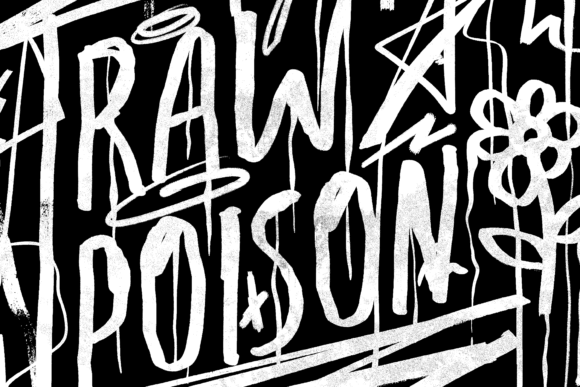
So, what exactly is the appeal of a font designed to look imperfect? At its core, a typeface like Raw Poison is a display font, meaning it's crafted for impact at larger sizes—think headlines, logos, and posters rather than body text. Its visual personality is built on irregularities. The strokes aren't uniformly thick or thin; they vary with a hint of a shaky hand. The edges are slightly worn or textured, as if printed on a vintage letterpress or sketched with a charcoal pencil. This aesthetic immediately evokes a sense of the handmade, the artisanal, and the authentic. In a digital landscape saturated with slick, corporate aesthetics, this rawness cuts through the noise. It feels approachable, creative, and full of energy. It’s the difference between a mass-produced greeting card and one that’s been screen-printed by a local artist—one feels personal, the other generic.
Where This Font Truly Shines: Practical Applications
Theory is nice, but where does a font with this much personality actually work in your projects? The beauty of a strong display typeface is its versatility in specific contexts. It’s a powerful tool in your design assets toolkit, but knowing where to deploy it is key.
Building a Memorable Brand Identity: For businesses that want to project an artisanal, rebellious, or deeply authentic vibe, this is gold. Imagine a craft brewery using it for their logo and bottle labels—it instantly communicates small-batch, hands-on quality. A vintage clothing store, a independent record label, a tattoo parlor, or a coffee roaster could build an entire brand identity around its gritty charm. It sets a tone that modern, sterile fonts simply cannot.
Packaging That Pops Off the Shelf: On a crowded shelf, your packaging design has a split second to make an impression. A textured, hand-lettered style font can create immediate visual interest and tactile appeal, even on a flat surface. It suggests the product inside is unique and crafted with care, which is a powerful psychological trigger for consumers looking for authenticity.
Posters and Editorial Layouts: Need to create event posters for a music festival, a local market, or a gallery opening? This font style carries the energy of the event itself. In editorial design, it can be used for pull quotes, section headers, or magazine titles to break the monotony of standard serif and sans-serif pairings, adding a layer of visual storytelling and engagement.
Digital Presence with Personality: Don't limit it to print. Used strategically, it can transform a website or blog. A striking headline in this style can hook a visitor immediately. For social media graphics, it’s a game-changer. Instagram posts, Facebook banners, and YouTube thumbnails featuring this typography stand out in a feed full of standard text, increasing engagement and shareability. It’s particularly effective for creators, marketers, and bloggers who want their content to feel more dynamic and less corporate.
Smart Pairings and Readability Checks
Here’s the most important practical advice: a font like Raw Poison is a star player, not the entire team. You wouldn't use it for a paragraph of body text—its charming irregularities would become a readability nightmare. The magic happens in the pairing.
The golden rule is contrast. Pair your bold, textured display font with a clean, neutral companion. A simple, elegant sans-serif font (like Helvetica, Arial, or a modern geometric sans) or a classic, highly readable serif font (like Garamond or Times New Roman) creates the perfect balance. Let the display font grab attention for headlines, logos, and key phrases, and let its partner handle the heavy lifting of longer copy. This ensures your design is both visually exciting and functionally clear.
Always, always test your pairings in context. Mock up a social media post, a website header, or a product label. Check the hierarchy—does your headline still dominate? Is the supporting text easy to scan? Print it out if it’s for a physical product. What looks good on a high-res monitor might lose its texture when printed on cardboard. The goal is a professional presentation where the style enhances the message, not obscures it.
Licensing and Long-Term Use
Before you fall in love with a creative font for a commercial project, check the licensing. Most premium fonts, especially those with unique character sets like this, come with specific commercial licenses. This is a critical step for designers, small business owners, and entrepreneurs. The license dictates how you can use the font—whether it’s for a single client project, unlimited projects, on websites via @font-face, or on merchandise for sale. Purchasing the correct license protects you legally and supports the type designers who create these valuable assets. It’s a small but essential part of professional practice.
Think of a typeface with this much character as an investment in your project's voice. It’s not just a set of letters; it’s a design asset with a distinct personality. When chosen carefully and paired wisely, it doesn’t just spell out words—it shouts, whispers, and sings with an authenticity that resonates. It’s the gritty detail that makes a brand feel real, a poster feel urgent, and a social media graphic feel human. In the quest for visual communication that truly connects, that kind of raw, poetic power is worth its weight in ink.