Scary Monday: The Typeface That Whispers Fear
There’s a specific kind of dread that comes with the start of the week, but what if you could bottle that anxiety and use it for art? In the world of design, typography does more than just display words; it sets the atmosphere. We have all seen the standard horror tropes—dripping blood, jagged scratches—but true unease comes from something more subtle. It comes from the feeling that the text itself is alive, watching, and perhaps a little unstable. This is the territory of display fonts, where personality takes precedence over neutrality, and where a single letterform can tell a story before a sentence is even completed.
The Anatomy of Unease
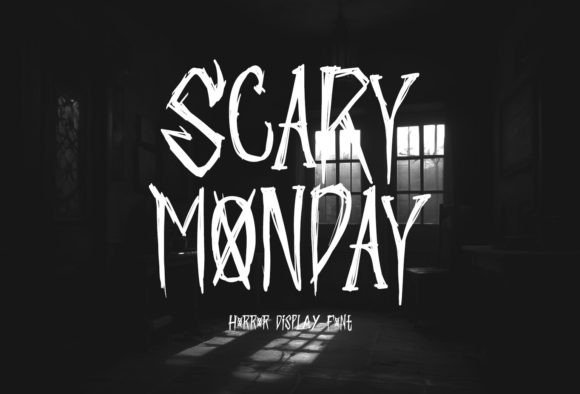
When you look at a typeface like Scary Monday, you aren't just seeing letters; you are seeing a narrative. The defining characteristic of this font is its intentional imperfection. The jagged, uneven edges mimic the frantic, unsteady hand of a writer under duress or the scratching of a claw against a wooden door. It avoids the clean vector lines typical of modern sans-serif fonts. Instead, it embraces a raw, organic texture.
The visual weight of the characters is heavy, creating a claustrophobic feel on the page. The letters seem to bleed into one another, blurring the boundaries between words. This is a crucial design choice for horror-themed projects. If you are working on a Halloween invitation, a movie poster, or a book cover for a psychological thriller, you need typography that feels ominous. This font exudes that malevolent energy without needing additional graphic effects. It is a premium font choice for anyone looking to bypass generic templates and go straight for the emotional jugular.
Practical Application: Beyond the Halloween Party
While "scary" is in the name, the utility of a distressed display font extends far beyond October 31st. As a designer or business owner, you need to think about the emotional resonance of your brand identity. Here is where a typeface like this shines in practical, commercial scenarios:
- Editorial and Packaging Design: Imagine a craft brewery launching a limited-edition "Black IPA" or a hot sauce brand with a ghost pepper flavor. A clean, corporate logo won't convey the heat or the danger of the product. Using a font with a sinister, handwritten quality instantly communicates the product's intensity. It works beautifully on packaging where the label needs to scream "Handle with Care."
- Event Branding and Invitations: For escape rooms, haunted attractions, or immersive theater productions, the branding starts the moment the customer sees the flyer. The "bleeding" ink effect of this typeface suggests mystery and urgency. It sets the stage for the experience before the guest even walks through the door.
- Merchandise and Apparel: In the streetwear and alternative fashion markets, typography is often used as a graphic element itself. A distressed, jagged font looks incredible on the back of a hoodie or the chest of a t-shirt. It provides a "lived-in," gritty texture that modern, clean typography often lacks.
- Social Media and Digital Assets: In a crowded Instagram feed, you have milliseconds to stop a scroll. High-contrast, emotional typography creates immediate engagement. Using Scary Monday for YouTube thumbnails, podcast cover art, or digital product covers for horror novels can significantly boost click-through rates by promising a specific, thrilling vibe.
Technical Versatility: The Designer’s Workflow
A font is only as good as its usability. A common frustration with decorative or "themed" fonts is that they are often poorly constructed, lacking basic punctuation or behaving erratically in different software. This is where professional-grade design assets prove their worth. This specific typeface is built for the modern creative workflow, tested rigorously on both PC and MAC environments.
Compatibility is key. Whether you are a vector purist working in Adobe Illustrator, a digital painter using Procreate on an iPad, or a layout artist in Corel Draw, this font integrates seamlessly. The inclusion of ligatures—where specific letter pairs connect or change shape to mimic natural handwriting—adds a layer of authenticity. It prevents the text from looking like a "stamped" stencil and makes it feel handwritten. Furthermore, the full suite of numerals and punctuation ensures that you can use it for complete sentences, pricing on packaging, or dates on posters without resorting to mixing different typefaces for numbers.
Strategic Typography: Pairing and Readability
One of the biggest mistakes in using a heavy, textured display font is overusing it. Because Scary Monday has such a strong personality, it demands a supporting cast. If you use it for a headline, the body text needs to be something quiet and legible.
Consider pairing this horror font with a clean sans-serif or a simple serif font. The contrast between the chaotic, jagged edges of the headline and the structured, clean lines of the body copy creates visual hierarchy. This contrast actually helps readability; the eye is drawn to the "loud" title, and then settles into the "quiet" paragraph text.
Here are a few tips for maintaining a professional presentation:
- Size Matters: Fonts with jagged edges and high detail can become muddy at small sizes. Keep this typeface large. It is meant for headers, logos, and feature titles, not for 10pt footnotes.
- Color Psychology: While black on white is classic, playing with color can change the meaning. A sickly green or a rusty red can enhance the horror aesthetic. However, ensure there is enough contrast to maintain accessibility standards.
- White Space: Because the font has a "bleeding" or "cluttered" look, it benefits from generous padding. Give the letters room to breathe so the jagged edges don't visually merge with the background elements of your design.
Building a Brand Identity with Edge
For small business owners and entrepreneurs, your font choice is a silent ambassador for your brand. If you are in the creative space—perhaps a novelist writing thrillers, a game developer, or a band in the metal or goth genre—your typography needs to align with your content.
Using a generic font like Helvetica or Times New Roman for a horror brand signals a lack of commitment to the theme. It feels safe and uninspired. Conversely, adopting a typeface with a "sinister presence" demonstrates that you understand your audience's aesthetic expectations. It builds brand recognition. When your followers see that jagged, scratchy text, they immediately know it’s you.
It is also worth noting the licensing aspect. When you invest in a commercial font, you are ensuring that your brand assets are unique. You won't see your exact logo on a thousand other websites because you moved away from the free, overused fonts available in standard libraries. This exclusivity is vital for standing out in a competitive market.
The Psychology of Fear in Marketing
We rarely talk about the "fun" side of fear, but in marketing, it is a powerful tool. This is known as "sensation seeking" in consumer psychology. Audiences in the entertainment, gaming, and extreme sports industries actively seek out high-stimulation visuals. A font that looks like it was written by a "sinister presence" taps into this desire for the macabre and the thrilling.
It creates an atmosphere of foreboding that promises a story or an experience. When you use Scary Monday on a movie poster or a book cover, you are making a promise to the viewer: "This will be intense." You are setting expectations. If your product delivers on that promise, the typography becomes a seal of quality for your specific niche.
Ultimately, the goal of design is to communicate a feeling instantly. While a sans-serif font communicates efficiency and modernity, and a script font communicates elegance, a font like Scary Monday communicates raw, unfiltered emotion. It is a tool for the storyteller, the disruptor, and the artist who isn't afraid to embrace the darker side of creativity. By leveraging its unique visual characteristics and ensuring technical compatibility in your workflow, you can transform a standard project into something that truly haunts the viewer—in the best way possible.